

Road haulage
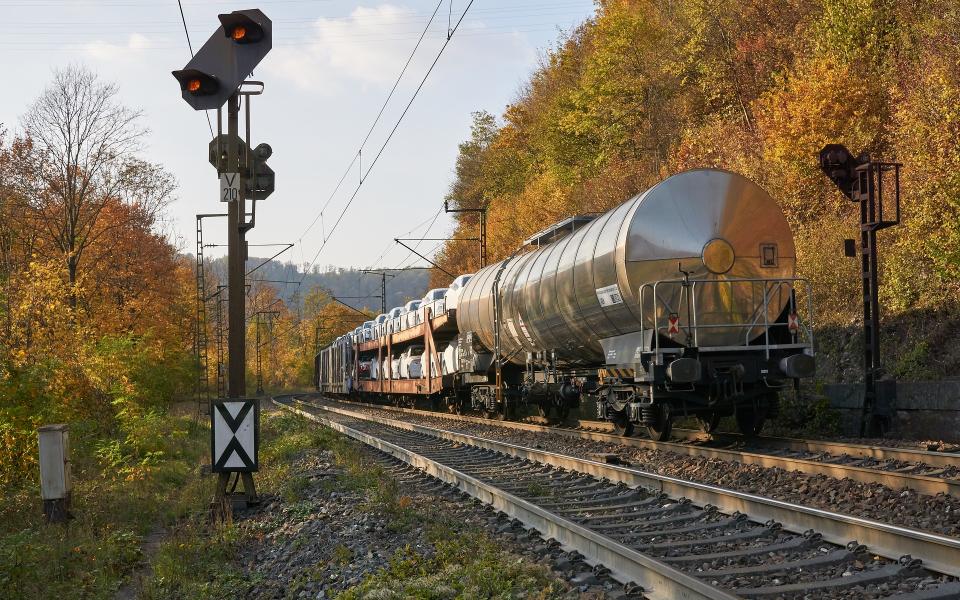
Road freight transport continues to have the highest share of total transport performance - around 70% of freight transport performance is carried out on the roads. Road transport is therefore far ahead of other modes of transport such as rail, which accounts for around 20% of transport performance. Even though rail transport has recorded high growth rates in recent years, the importance of road transport has hardly diminished. The main reason for this is the high flexibility with which lorries can be deployed quickly and cheaply.
Around 3,560 commercial road haulage companies in Hesse ensure that goods and merchandise reach their destinations "just-in-time" - 1,000 of these are organised in the Fachverband Güterkraftverkehr und Logistik e.V. (Association for Road Haulage and Logistics) alone, with a further 300 or so in the Speditions- und Logistikverband Hesse/Rheineland-Palatinate e.V. According to the Federal Office for Goods Transport, all companies together employ just under 52,000 people in Hesse, with around 80% of employees working as drivers. However, the number of trainees in the industry is low - less than 1% of employees in Hesse. This is due to the low demand for apprenticeships in logistics compared to supply. Companies in Hesse are therefore making every effort to interest young people in the interesting field of logistics. Companies have successfully committed themselves to training alliances and have ensured that there are now three locations in Hesse where drivers can train at a vocational school. Companies willing to offer training are also supported by the associations, especially as professional drivers are now in particularly high demand. As in many other professions, the requirements here are also increasing, but at the same time making everyday working life more varied: for example, comprehensive PC skills are no longer required in the commercial training professions for freight forwarding and logistics services, but also for drivers. Finally, more and more companies are relying on IT solutions for scheduling and fleet management, which also have to be operated from the vehicles. In addition, the increasing internationalisation of production links means that the proportion of foreign assignments also requires foreign language skills.
-
German Road Haulage and Logistics Association
https://www.gueterkraft.de/
-
Forwarding and Logistics Association Hesse/Rhineland-Palatinate
https://slv-spediteure.de/slv-spediteure/index.php